Skip to Content

About:

Recent Posts by drawingroomlex

Stirring the Pot

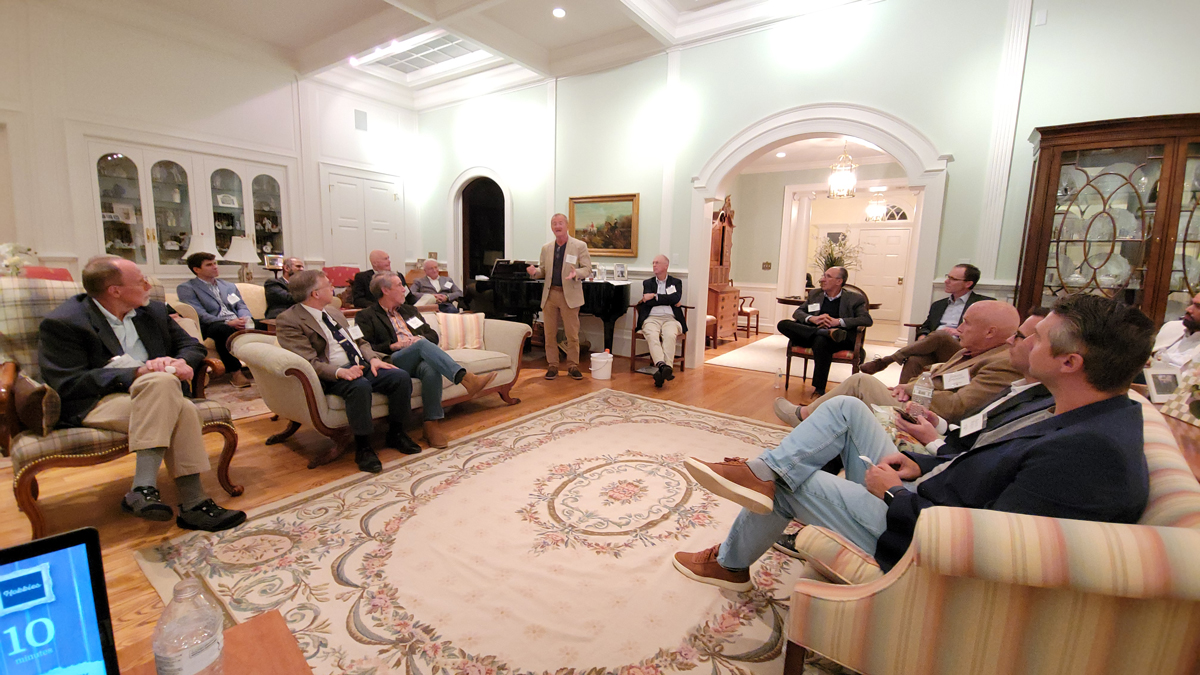
We wanted to spice things up for the Winter 2026 edition of The Drawing Room and that calls for chili. Not just any chili, but “Brooking’s Chili King,” the unique brand of chili served at the greasy spoon restaurant down on Euclid Avenue made famous by UK basketball coach Adolph Rupp. He frequented the hole-in-the-wall spot across the street from Memorial Coliseum so often they gave him his own booth. The joint closed in 1991, but the secret recipe was published by the Lexington Herald Leader, and Larry’s wife Tina mixed up a batch of Brooking’s that helped fuel the evening. Jeff Parr added the spaghetti base, cheese and sour cream toppings, and topped it all off with cakes from Spalding’s Bakery. De-lish!

Brooking’s Chili wasn’t the only way we stirred the pot. The dozen attendees also enjoyed meaty discussion on a variety of topics:

  • Icebreaker question: If you had a time machine, would you go back in time or into the future? Where to? Why? Interestingly, all 12 attendees said they would go back in time, though the time periods ranged from biblical times to last week.
  • Creating a Buzz: We love to hear about the quirky hobbies of Drawing Room members, and Peter D’Sousa shared about his beekeeping adventures. Bees are a remarkable demonstration of the wonder of God’s creation. Thanks, Peter, for the bee-utiful presentation.
  • A Biblical Worldview of Immigration & ICE: With the goal of finding a topic that would stir the pot and produce diverse perspectives from our homogenous group of men, Larry moderated (or perhaps ignited) a discussion on the hot topic of immigration and ICE. The heart of The Drawing Room is to bring a bring a biblical worldview to a world of interesting topics. But if a side goal is to also avoid making The Drawing Room an echo chamber, the segment was a success. See the Appendix below for a summary of Larry’s proposition.
  • The Great Books: Dr. Jeff Parr gave a presentation on the Great Books of the Western World, a set of 54 volumes originally published in 1952 by Encyclopedia Britannica. He owns a complete set and passed around some volumes. View a list of the Great Books volumes and works.
  • An Out-of-this-World Website: We periodically share cool websites, and The Size of Space really puts the vastness and complexity of God’s creation into perspective.
  • A First-Class Second Act: Recently retired from a career in wealth management, David Parks is now investing his life in a truly global enterprise—helping to plant a church in Halifax, Nova Scotia, Canada. Providing a stellar example of how to turn “retirement” into a renewed mission, David now spends several months a year working on-site at the church in Halifax, helping with everything from setting up chairs to preaching. Great job, David!
  • Are You an Unbiased Reporter? Larry lamented the death of objective journalism, the Fourth Estate. We all know about the liberal media and how hard it is to find true, balanced, unbiased reporting. We shared a few news sources that do a fairly good job (the first three have a biblical worldview): World (The World and Everything in It), The Pour Over, Christianity Today Daily Briefing, 1440, and Reuters. But Larry then challenged the group to evaluate their own bias in reporting The Good News and helping the world interpret current events and culture through a true biblical worldview. Are you biased by the Republican or Democratic parties? Do you follow thought leaders or the Holy Spirit? Are you checking The Source for wisdom from above (James 3:17) rather than earthly sources?

The next Drawing Room will be Thursday, June 4, 2026. Let Larry know if there’s a topic you would like to suggest!

_______________________

Appendix: A Biblical Worldview of Immigration & ICE

Below is the proposition that Larry used to frame our discussion on “A Biblical Worldview of Immigration & ICE

Whereas the Bible commissions us to make disciples of all nations (Matthew 28:19),

Whereas God has blessed America in a way that attracts many internationals to move to the United States, making it highly efficient to disciple them without the need to send missionaries across the world,

Whereas God has commanded His people to not oppress the sojourner (Exodus 23:9; Zechariah 7:10), but to treat them as natives and love them as yourself (Leviticus 19:33–34), give them food and clothing (Deuteronomy 10:19–19; Matthew 25:35), and otherwise show them hospitality (Hebrews 13:2), since we Americans are all immigrants (except Native Americans),

Whereas God has also ordained the institution of government to “bear the sword” and for denizens to be subject to the governing authorities (Romans 13:1–7), establishing the “rule of law” that helps make our nation attractive,

Therefore, for the sake of the Gospel, I am in favor of allowing virtually unlimited legal immigration into the United States and am also in favor of preventing and correcting virtually all illegal immigration so that legal immigration can be better maximized.


 

READ MORE

The Drawing Room Resurrected!

The Drawing Room has been resurrected! After a nearly six-year hiatus in which the group met only one time due to COVID and Larry’s “sabbatical” in Florida, The Drawing Room resumed on October 23, 2025. Present were 12 of the original charter members plus six new faces—18 erudite men hungry to expand their minds, and perhaps, their beltlines as they enjoyed sumptuous Southern fare that included Chicken & Waffles, real maple syrup, and fresh fruit.

Chicken & WafflesFar more impressive than the marvelous menu is the magnificent mansion which now serves as the new venue for The Drawing Room, the exquisite home of Dr. Jeff Parr. Everything about the breathtaking new setting—kitchen, dining rooms, and drawing room—is spectacularly grand. Thank you, Jeff, for your gracious hospitality in hosting The Drawing Room.


The program for the evening included a full-line-up of topics for consideration:

  • Icebreaker: This or That?
  • A Hobby in Extraordinarily Good Taste—David Lane on homemade syrup making (including taste testing!)
  • How Will AI Influence Theology in the Next Generation—Dr. Lindell Ormsbee
  • Is UK a Final Four Team?
  • The Symmetry of a Long Life—Larry Thompson
  • Are You Taking Enough “Do Nothing” Time—Jimmy Johnson
  • Hope, Help, and Healing by The Book—Dr. Jeff Parr on Biblical Counseling
  • Are YOU an Unbiased Reporter? (postponed due to time)

Below are a few links if you’re interested in more information on some of these topics:

Thank you to all the presenters. Outstanding job! Please let me (Larry) know if you have a topic you would like to suggest, including a book, article, podcast, interest, trip, idea, or concept that you would like to share.

Thank you to Jeff Parr for opening your lovely home and for helping to provide a splendid meal. Thanks also to David Lane for providing the real maple syrup.

It was a sweet evening!

READ MORE

How Did The Drawing Room Begin and Where Is It Headed?

The birth of The Drawing Room began with an obituary.

About five years before I launched The Drawing Room in 2018, I was reading the obit of a precious saint from our church—the historic Ashland Avenue Baptist Church. Mr. Cecil York was absolute Ashland Aristocracy, a true pillar of the church where I had attended since nine months before I was born. Though I looked up to him as a kid, and loved and respected him as an adult, when I read his obituary, I was astounded. WWII sailor. Owner of a masonry company that built several notable central Kentucky buildings. Photographer. Award-winning movie producer. Private pilot. Boy Scout leader. A 17-year volunteer at the Center for Aging. After retiring, he wanted more exercise and began delivering daily newspapers; he was twice named Carrier of the Year in his late 60s. Mr. York was a wise and winsome man who was widely known for giving the best hugs at our church. I could go on and on.

Why hadn’t I ever had a conversation with this extraordinary man? Why hadn’t I met him for lunch, asked him to tell me more about his remarkable life? Why did I wait until it was too late?

These regretful questions haunted me. A natural introvert and an awkward conversationalist, I knew myself well enough to know that unless I became more intentional about spending time with other men, I probably couldn’t scrape together six pallbearers.

People are interesting, and everyone has a story. There’s something I can learn from each one, and perhaps there’s something I can share. God built us with a need for community. I wanted to discover first-hand what I could learn from men like Cecil York—before I read it in an obit.

Because I’m more task-oriented than people-oriented (and that’s OK; God uses both types), I knew that I would have to program it into my life. So I began envisioning a group of men, and crafted a gathering to be an event that I would enjoy it. I’d find out if other men enjoyed it, too. It turns out, they did.

I looked around me and carefully hand-picked a select group of men. Some were already good friends. Others were men whom I had observed that seemed to have something extraordinary about them.

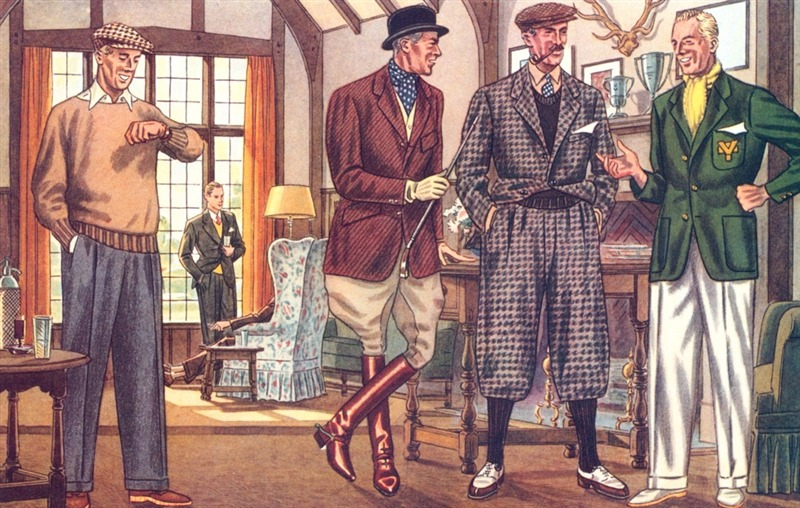
The gathering would not be a Christian event or Bible study. It would be a world study from a biblical worldview. It would be a group of men who happened to be living the “normal Christian life,” as Watchman Nee put it, who would learn from each other. It would be “A Remarkable League of Inquisitive Men.” From the throwback “jackets suggested” requirement to the rapid-fire “Pardon The Interruption” format to the venue in an actual 175-year-old drawing room, it would be a bit odd, quite unlike anything the men had ever experienced.

The Drawing Room was born.

The inaugural meeting was held on April 12, 2018, with 18 hand-selected men in attendance at our Richardsonian Romanesque home at 467 W. 2nd Street in downtown Lexington. The manly topics that evening included sports, books, politics, philosophy, science, family, film, ethics, finance, and craftsmanship. The menu featured White Castle sliders and other “frat boy” favorites.

The Drawing Room continued every quarter for two years through January 9, 2020, with 26 charter members. Then COVID hit, and we met only one more time, July 3, 2020, before my wife and I decided to relocate to Florida—better weather, better politics. But alas, in 2025, we decided for a combination of family reasons to migrate back to Lexington and simply consider our move to Florida to be the longest and most expensive Florida vacation in history.

After returning, several former Drawing Room members shared fond memories of the gatherings and wondered if it would ever return. No longer living in a suitable location to host The Drawing Room, however, I approached Dr. Jeff Parr about hosting, and he graciously and enthusiastically agreed.

So, The Drawing Room was born again, resurrected, if you will—appropriately enough!

Other than the new venue and a few new faces, we’re not changing a thing about The Drawing Room. Which is fine with me; I’ve had enough of constant change and downgrades after COVID. We briefly entertained relaxing the dress code, but men seemed to enjoy making the gathering a little special, if not a little peculiar.

We will now meet only three times a year, but that change had already been announced in 2020. Four times a year just seemed to come around awfully often, and we’re all busy men.

But the core concept of The Drawing Room remains steadfast. We’ll continue to use the same fast-paced format and explore a plethoria of topics, and, of course, we’ll eat good food. We’ll still keep the same three simple ground rules:

  1. Always strive to enlighten every topic with a biblical worldview.
  2. What is said at The Drawing Room, stays in The Drawing Room.
  3. Practice respect and forgiveness. We’re all big boys.

I still have a passion for learning more about people’s lives, for learning more about a million things in the world that I’m inquisitive about, and for connecting it all to the Truth found in God’s Word. That’s why I started The Drawing Room. That’s why we’re relaunching it. That’s why I hope you join us.


READ MORE

Life in the Fast (and Slow) Lane

At The Drawing Room, you won’t find a lot of confusion about what it means to be a man. But you will find a wide range of backgrounds and perspectives on how to live out a high-horsepower, Christ-centered, masculine life. The January 9, 2020, edition of The Drawing Room put this goal into high gear. Thirteen men attended this final episode of season 2 of The Drawing Room, including two men who have faithfully attended all eight sessions: Wayne Boyd and David Lane. Here were the evening’s topics:

  • New Year’s Resolutions
  • My Race Car Driving Days by Aaron Hogue
  • Men Raising Men: Rearing Boys in Today’s Culture by Scott Perron
  • Boycotts: Do They Work? Should We Do Them?
  • Women’s Roles in the Family, Church, and Society: Complementarian vs. Egalitarian View of Sexes by Thomas Walters
  • TurboTalk | Should Trump Have Been Impeached? Should He Be Removed from Office?
  • Kayaking Kentucky by David Lane

A few links to note: During the segment on Complementarianism vs. Egalitarianism, we mentioned an excellent sermon by Dr. Albert Mohler entitled “Male and Female He Created Them.” Also mentioned from Dr. Mohler was his response from The Briefing to Christianity Today‘s editorial calling for Trump to be removed from office.

One of the highlights of the evening was the fun video produced by David Lane especially for The Drawing Room audience. It made quite a splash!

Thanks go out to David and the other presenters—Aaron, Scott, and Thomas—as well as to Larry’s wife, Tina, who whipped up a scratch batch of mouth-watering Cincinnati chili, 3-way, 4-way, and 5-way. Delish!

The evening also included an important announcement about Volume 3 of The Drawing Room. In the context of New Year’s resolutions, Larry relayed that his life theme for 2020 is to “Streamline and Simplify” in order to create margins in his life for him to “Sensitize and Serve” others. To that end and prayerfully for the long-range success of The Drawing Room, Volume 3 of The Drawing Room will include three sessions instead of four. Larry mentioned that once a quarter seems to come around very often, and people vote with their feet. So it’s hoped that this change will enable this league of busy men to stay faithful to the group and still enjoy a critical mass of community and camaraderie. Another tweak that was announced is that in a continuing effort to foster more discussion and interaction, we will try moving from 7–9 topics per evening to 3–4 topics, one of which will be an in-depth, hour-long focus on a larger topic. This format should help cultivate a better exchange of ideas while still keeping the evening moving at a fast pace.

The next Drawing Room will be four months away on May 7, 2020. God’s speed to you!

READ MORE

Extreme Manhood

What do Navy Seals, Marine Sergeants, guns, careers, and workshop hacks have in common? Extreme manhood, yes, and all were elements of the latest edition of The Drawing Room, held October 10, 2019. Eighteen manly men attended, and the evening got cookin’ with a low country shrimp boil that featured Shrimp Po-Boys and baked potato soup. We then sank our teeth into a full line-up of testosterone-infused topics that included:

  • Book Report by Chad Lindon | 48 Days to the Work You Love by Dan Miller
  • Book Report by Dave Fenz | Extreme Ownership by two U.S. Navy SEAL officers, Jocko Willink and Leif Babin
  • How Do We Respond to Homelessness? by Steve Pruitt
  • TurboTalk | Is Gun Control a Christian/Pro-Life Issue?
  • Workshop Hacks by Dale Tolliver
  • Your Bucket List
  • Meet Sergeant Nathan Noble, special guest and business colleague of Jim Johnson

The topics of homelessness and gun control in particular inspired lively discussion and presented questions and food for thought that we may consider again during future Drawing Rooms.

A special salute goes out to U.S. Marines Sergeant Nathan Noble who kept the group entranced with the story of his military exploits around the globe. We thank him for his faithful service, and we appreciate his boss, Jim Johnson, for bringing him to meet our group.

Please feel free to leave comments on what stood out to you during the evening and on various resources that would be good follow-up for the topics discussed.

Next quarter’s gathering of The Drawing Room will be Thursday, January 9, 2020. Oorah!

READ MORE

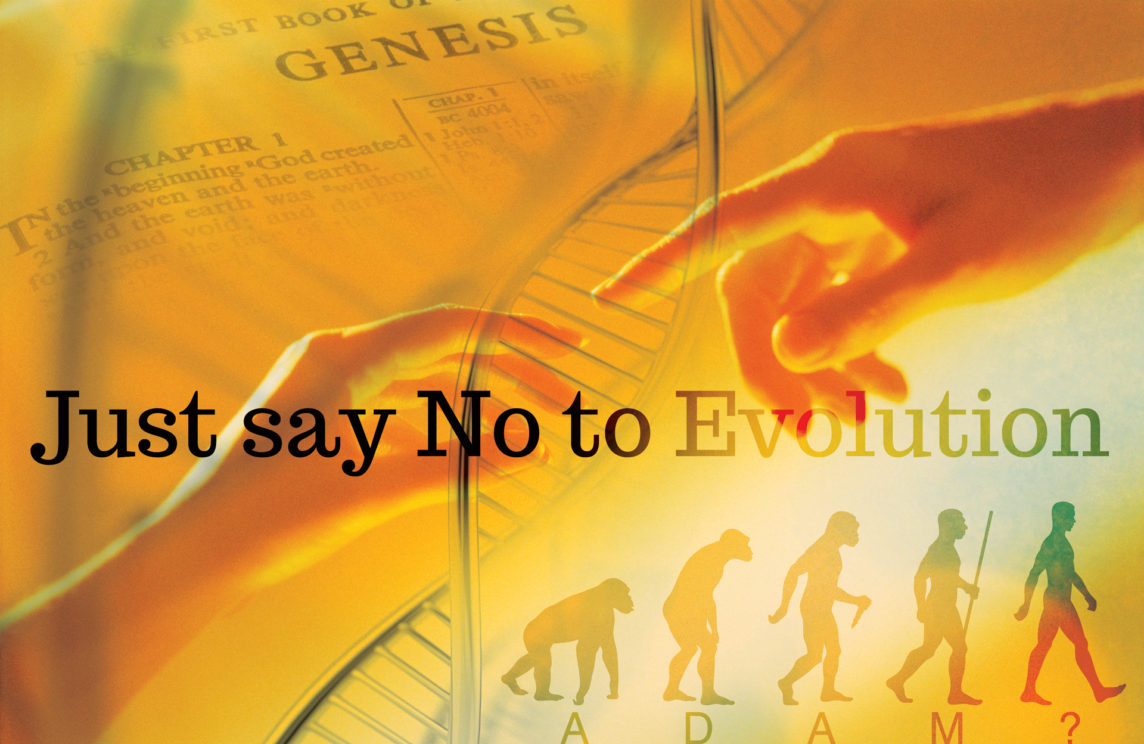
Just Say No to Evolution

By Stephen B. Pruitt

I am a self-described fundamentalist or evangelical Christian. As such, I believe the Bible is the inerrant, inspired Word of God including the creation account recorded in Genesis.  The debate over origins does not just take place between evolutionists and creationists. It is also a matter of dispute among Christians. Two books have been brought to my attention, each written by a Christian; The Language of God: A Scientist Presents Evidence for Belief by Francis Collins and Coming To Peace with Science by Darrel Falk. They are each sincere and their knowledge of science is impressive. But I think their viewpoints are flawed and I want to make a case for how.  I intend to respond to these authors, at times individually and at times collectively. In fact, I will be responding to evolutionary belief in general and at times my words may seem harsh or uncharitable. It is not any individual to whom I’m directing uncharitable words but to the whole evolutionary movement. I realize that Collins and Falk do not deny God but they have acquiesced in a movement that does. Far from helping us know or understand God and His plan for the redemption of sinful man, I think this movement mocks Him and leads people away from Him – often forever.  Also, I am mindful that I am an uneducated blue collar worker, far from an academician or scientist and hardly qualified to address the points of these distinguished scientists with any credibility. All I can say in that regard is that I think God used people like me to write his Word and intended it to be read and understood by… people like me.

An essential part of the classic evolutionary interpretation of the evidence we can all observe is the universal assumption that there is an inexorable upward progression of complexity, order, utility and functionality in all living things. I challenge that as a biased, unproven, prejudiced interpretation of the observable facts and ask, “Isn’t the reverse more likely?” After all, nowhere can we observe an upward movement in genetics toward the spontaneous appearance of more information, order or complexity but what we can and do observe is the loss of those things. Science as we understand it, such as articulated in the Second Law of Thermodynamics, tells us that every system is running down, tending toward disorder.  Energy forms become less accessible and usable over time. The trend for human beings, other life forms and the earth we live on is downhill, almost as if the whole thing had been cursed at some point.

The committed evolutionist cannot allow this more observable, provable, intuitive hypothesis any credibility because starting at the top and devolving downward would require a special, intelligently designed creation to begin with. That would mean a Creator to whom we would be accountable. The proud human heart has a hard time with that so it theorizes the opposite though it is contrary to what we observe. He then looks at a planet covered by a mile or more of sedimentary rock filled with the fossils of billions of dead things buried instantaneously – exactly the evidence one would expect as the result of a catastrophic, world-wide flood – and he takes the position that all those strata were laid down (or cut out) at the same uniform rates observable today. This yields millions of years for the sediments to be laid down and more millions of years for the Colorado River to cut the Grand Canyon and an ancient age for the fossils found in the rocks of the lower layers. His comrades and peers also don’t want to be accountable to a creating God with moral rules so they all concur in the arrogant “Emperor’s New Clothes” world of big time science. And if Christian scientists want to be taken seriously, they go along.

It’s not that the evidence isn’t there for a recent miraculous creation, it’s that the implications of it are too threatening for the proud, rebellious mind of fallen man. Galileo said, “I do not feel obliged to believe that the same God who has endowed us with sense, reason and intellect has intended us to forego their use.” Neither do I. My sense, reason and intellect confirm the Genesis creation account (and so did Galileo’s).

Collins

Neither understanding the sciences of genetics and heredity nor the fact that genetic components and processes are held in common among various different life forms, negate the reality of God as Creator or a quick and recent creation.

God has established an orderly process of communicating instructions from one generation to the next. He has used the same basic building blocks for all life forms. I would expect that of a Creator, not deny him or His account of creation because of it. DNA is an incredibly complex language containing stupefying volumes of information. That does not happen spontaneously and without cause.

Collins says it is “untenable” to suggest that genetic similarities across species lines “could simply demonstrate that God used successful design principles over and over again.” What is untenable about it? Why wouldn’t or couldn’t God use consistent successful genetic principles repeatedly? Genetic commonalities found both in humans and lesser species do not prove evolution. They suggest a Creator using consistent principles throughout the spectrum of the life He creates. The evolutionist interprets that evidence as “proof” of descent from a common ancestor; evolution. The creationist sees the very same evidence and doesn’t conclude evolution at all, but rather, a consistent Creator. Why would or should God use completely new and unique genetic languages to accomplish the creation of multiple varieties of life when his original and chosen language is both the best and most efficient? And it’s His.

The fact that more mutations are found in DNA which is not necessary to communicate vital instructions on heredity (junk DNA) may be interpreted by someone inclined toward evolution as just what the theory would have predicted.  But it seems simple common sense that mutations in vital, communicative DNA would, for the most part, be deleterious and not passed on to offspring because the bearer of these mutations is less suitable for survival and reproduction. Mutations in junk DNA do not affect an individual’s suitability or likelihood to reproduce so they don’t get weeded out. No proof of evolution at all.

The stickle back fish, which in the absence of salt water predators, lose their armor plates are still fish and they have not evolved new information or complexity but have actually devolved, losing a trait that they formerly possessed. If predators appear among a population of a fish which has never had armor plates will they evolve the armor? I don’t think so and they will still be fish.

Collins can’t get away with saying, “The distinction between micro and macro evolution is artificial” unless he is prepared to prove it. Apparently he is not. What is called micro evolution is simply the adaptation of living things to their environment based on inherent genetic variability. No one denies that it occurs. The finches with longer beaks observed by Darwin on the Galapagos Islands would be an example. The capacity for this adaptation is present within the genetic make-up of the organism from the beginning and it proves nothing beyond that. Macro evolution would involve a jump from one species to another or to a new species that didn’t exist before. No one has ever seen this occur. It is not justified to assume that it does based on the much more minor adaptations. Experiments in genetics have repeatedly shown that there are firm limits to genetic variability. Living things reproduce “after their own kind” and not beyond that kind.

Every time Collins uses the term “common ancestor” couldn’t we use “common creation principles” and have the sentence still make sense but without undermining the Gospel? It is a matter of interpretation. I’ve heard it said by evolutionists about creationists, “They don’t have any evidence”.  We have all the same evidence as the evolutionist; exactly the same evidence. The difference is how we interpret it. 

Couldn’t ancient repetitive elements (ARE’s) happen due to genetic inclination? If I find that a man in Borneo is a thief and a woman in Buffalo is also a thief, must it follow that they are brother and sister, children of the same parents (common ancestors)? Or could it be that the inclination to steal is common to human beings, though somewhat at variance from the ideal?

Couldn’t the “special sequences” found at the fusion of chromosome 2 represent, not evidence of a common ancestor from whom we descended, but evidence of closely related but lesser life forms created using the same creation model?

Why can’t the Fox 2 gene responsible for speech simply be more developed in humans because God wanted it that way? He made the primates less capable in that regard. It doesn’t prove we evolved upward. The same Creator who conceived the Fox 2 gene in the first place put it into mammals and enhanced it in humans.

Collins says on page 141, “…evolution has been the source of great discomfort in the religious community over the past 150 years…” That is true because evolution is most often used to deny the existence of God. I would counter, “Divine creation, as described in Genesis, has been the source of much greater, in fact unbearable, discomfort in the unbelieving scientific community over the same time period.” And, consequently, the scientific community has been almost unanimous and very aggressive in their efforts to undermine and discredit it. So aggressive in fact that Creationism cannot even be presented alongside evolution in most schools so that students can decide for themselves which model most closely fits the world they live in.

As for Collins’ list of evolutionary scientists who are also Christians, I suspect they spent much more of their time and study on evolutionary science than they did on Christian theology. High credentials and achievement in science do not necessarily impute the same in theology.  I suspect most of them have little awareness of the catastrophic effect their beliefs have on the deeper theology of the faith they claim. I would counter that there have been many famous scientists who were creationists such as Newton, Kepler, Galileo, Boyle, Pascal, Faraday, Pasteur, Linnaeus and many more.

On the subject of stubborn adherence to Young Earth Creation actually undermining the faith of those who come smack up against the “stone wall of settled science”;

   1. I don’t agree that the science is settled except among evolutionists. And we don’t arrive at settled science through majority vote.

   2. I think far more harm is done to the faith of those who feel forced to concede that God’s own account of His creation can’t be trusted.

The accounts of Creation, the Fall and the Flood are all critical to understanding God’s plan for the redemption of sinful man and the world as it is. I do not expect Collins to address this because it is theology and he is no theologian but he is not just messing with the credibility of a few chapters of ancient writing here, he is messing with the essential fundamentals of the “Good News”. If there was not a literal Adam then Adam’s disobedience to God could not be literal. But there was and it is:

   Romans 5:12, Therefore, just as through one man sin entered into the world, and death through sin, and so death spread to all men, because all sinned-

   I Cor. 15:21, 22, For since by a man came death, by a man also came the resurrection of the dead. For as in Adam all die, so also in Christ all will be made alive. 

Consequently, without Adam’s fall how do we explain the inclination of man to sin? He couldn’t have been created that way originally and still have been deemed “very good”. Not when his “…heart is more deceitful than all else and desperately sick;” (Jer. 17:9). And, if man was created in this flawed manner what of the restoration we are promised in eternity. We are led to believe that eternal life will be a return to God’s original plan for mankind as manifested in the Garden. And if it isn’t true that “all have sinned” and become separated from God then why do we need a Savior to reconcile us to Him? The unbelieving evolutionist knows how critical and foundational these concepts are to Christianity. Perhaps he knows it better than those who would try to harmonize evolution with Scripture.

I have been personally attacked with the Galileo comparison, “Galileo practiced good science and the church persecuted and punished him for it. Now, those who do not believe the ‘settled science’ of evolution are just as guilty.” Nowhere does the Bible say the sun revolves around the earth and no part of Christian theology is dependent on that concept one way or the other. On the other hand, the Bible does make some straightforward assertions about the Creation and the Fall. And they do have the most profound and critical implications for Christian theology.

The fact that some (the Catholic Church) felt threatened by the valid findings of Galileo should not mean that scientists are always right and fundamentalist Christians always wrong. Why don’t we just hold today’s evolutionary scientists to the same standard to which Galileo was held? Let them prove the validity of their position, not by majority vote, not even by a preponderance of the evidence, but by scientific proof – observation and duplication by experiment. Short of that we do not have “settled science”, we have theory. Actually we don’t even have a theory as a theory has to be testable. What we have is a model. I am not aware of a single scientific assertion made in the Bible that has been disproved. I am aware that there are thousands of assertions made by scientists throughout history which have been proven wrong and subsequently revised or discarded.

The primary reason Collins gives for condemning Intelligent Design is that it does not provide what he calls ‘predictive usability’. I disagree. Genesis 1 – 3 offers the ultimate in predictive usability. Man’s fall and the resultant curse allow us to understand so much of what we observe in the material world. Underlying evolution is the original satanic lie that man is good and capable of getting better, not by divine regeneration, but by works and natural processes – “You can be like God”. False religions since the beginning have been founded upon this delusion. But that is not what is happening. Man is fallen and the earth is cursed. I think it was G. K. Chesterton who said that this is the most verifiable concept in all of Christian theology. We need only read the front page of any newspaper throughout history. What we find can only be adequately explained by the fall of man as described in Genesis 3. And, predictably, this trend will continue. To the extent that predictive usability is the standard for a valid theory, the Genesis account should stand and evolution should fall.

On page 225 Collins criticizes Christians for “the exclusive club they inhabit” and “dismissing the spiritual experience of others”. We have acknowledged that Collins is a good scientist and a Christian but he is a bad theologian. He quotes passages about God’s love but fails to quote John 14:6, “I am the way, the truth and the life. No man comes to the Father except through me”. Religious pluralism (a non-exclusive club) cannot be valid because at least one of the many “paths” (ours) claims to be the only one. It is an exclusive club indeed, a narrow road one might say.

Falk

It’s nice that such figures as Augustine, Calvin and Wesley seem willing to concede that the Bible is not intended to be accurate in matters of science. I would be more impressed however, if an actual biblical writer took that position. If the, “It is all true but the science is flawed” view of the Bible were a valid way of looking at God’s Word, wouldn’t it seem reasonable for God himself to tell us so? Or, in the absence of that, for science to have disproven some aspect of God’s Word by now?

Unlike Richard Dawkins (another author I read in preparation for this discussion) and Francis Collins, Darrel Falk is theologically sound. Chapter 2 was all theology, no science, and I found nothing with which I disagreed.

Chapter 3 is very compelling. Falk is the first author I’ve read on this subject who treats the Christian young earth creationist gently, almost respectfully. He is quite obviously a teacher. He endeavors to know where his audience is academically, and he makes the effort to meet them there and to lead them. This is the best presentation on an old earth I have read and I’ll do my best to respond with science as convincing as that with which he has made the case. He touches on tree ring dating, ice layers in Greenland and Antarctica, pond sediments and radiometric dating. Tree rings will never prove an ancient earth. The oldest trees in existence have rings going back about 4,500 years. Extrapolation of combining ring identities from found wood can push it back a little further but not much. I have read that it is possible and has been observed in unusual weather conditions (such as are likely to have prevailed in the aftermath of the Flood) for trees to produce more than one growth ring in a year. He failed to mention that. If anything, tree ring dating argues for a young earth. Ice layering is also an inexact science. The great weight of overlying snows compresses the layers so thin as to make differentiating between years and other shorter events difficult if not impossible. No proof there. In the final analysis the evolutionist relies almost entirely on radiometric dating of rocks to sustain his old earth belief. So how good is it?

It is far from reliable. Though our culture has indoctrinated us to see tremendous age in rocks, there is nothing inherent in their appearance which indicates age beyond thousands of years. I have read that recent volcanic rocks of known age have undergone blind testing and yielded ages of millions of years. When dealing with the immense time frames at play in this type of dating, the smallest error can result in very large distortions, similar to being off a millionth of an inch in sending a projectile to the sun resulting in missing the sun by millions of miles. A small inaccuracy extrapolated over millions or billions of years can yield results that have no connection to truth. In fact, assuming anything about the conditions which have prevailed over billions of years during which we have been unable to observe them is speculative to the point of absurdity.

I do know this; in order to use radiometric decay as a dating method the scientist must know three things precisely. First, he must know the starting point; the level of parent element as it compares to the daughter element. He can make assumptions about what these levels may have been in the distant past but the further back into the past he attempts to go, the greater the chance of error. The truth is no one knows the starting ratios of parent and daughter elements a billion years ago. Second, he must know the rate of decay.  Whether it has been consistent for billions of years or there were variations, he must know precisely including any inconsistencies. And third, he must know whether the system was closed, totally closed the entire time – nothing in and nothing out. In speculating about the conditions in which this decay took place over millions or billions of years assumptions have to be made. There are and have been conditions which could alter the element ratios and the assumed rates of decay. For example, uranium and lead can be leached away in ground water and cosmic radiation can affect the behavior and balance of neutrons which impact the atomic weights which identify the parent and daughter. We must be able to nail these variables down for certain or we will be led to meaningless conclusions. Since we cannot nail the variables down about the conditions that have existed over such long periods of time, I think the vast age conclusions are virtually meaningless.

My primary reason for skepticism, however, is that the evolutionist needs time, and lots of it, so he is inclined to embrace whatever theory gives him that immense span of time. And, as we’ve seen, the evidence really isn’t there. In fact, the great ages assigned to the geologic column did not result from the discovery of radiometric dating but were assumed long before its advent. This concept of unfathomable, stupefying periods of time will be a recurring theme in the remainder of my discussion of this subject and I will return to it. Remember, an evolutionist needs immensely long periods of time. His theory depends on it. Watch for references to vast spans of time whenever you read evolutionary biology. Those references will always be there. Without them this theory falls flat. For this reason the evolutionist will grasp uncritically onto any theory of dating which will appear to provide unfathomable time frames. And he will ignore or discount evidences of a young earth of which there are many.

In Chapter 4 Falk takes up a discussion of the fossil record. Before responding directly I can’t help but to mention the fact that neither of these authors mentions the possibility that the earth has experienced a catastrophic, worldwide flood.  That seems unusual since such a flood is described in such detail in Genesis 6 – 9. Again, we all have the same evidence and how we interpret that evidence will determine our world view. It seems disingenuous to me that two professing Christian scientists can use the geologic column and the fossil record it contains in an attempt to prove that God’s account of His creation is totally inaccurate and unreliable yet ignore God’s account of how that geologic column was formed in favor of a speculative alternate view. The flood is described in detail. Other biblical sources, including Peter and Jesus refer to Noah and the flood in ways that can only be perceived as literal. The Flood explains the geologic column and the fossil record perfectly and in a manner consistent with the evidence we can see and experiment upon today. If a flood catastrophic enough to cover the entire earth for more than a year and kill every land dweller that wasn’t on the ark is not responsible for earth’s present geology, then where is the evidence of that flood? I’ll grant any Christian the right to his own opinion of the past but to ignore the Flood account as if God never mentions it insults my intelligence.

According to the theory of evolution, “…all continues just as it was from the beginning of creation. …when they maintain this, it escapes their notice that…the world at that time was destroyed, being flooded with water.” (II Peter 3:4, 6)

On page 84, Falk says, “It is as though the rocks (of the geologic column) are a great file cabinet…we can date the file cabinet drawer, then look inside. What we see is a near perfect correlation between the age of the drawer and the sorts of organisms that are found in it. It is difficult to reach any conclusion other than that there has been a gradual change in the types of organisms that have existed on the earth.” Falk may think it’s difficult but I’d like to suggest a different conclusion. Could it be, as we look at the time line, the file drawers and their corresponding organisms, that their stratification tells the story, not of evolution from simple to complex over millions of years, (since we never see that happen in nature) but rather from the inability to flee from a catastrophic water deluge up to those who could best flee to higher ground until that too was covered? In that scenario we would expect animals to be grouped in ecological communities corresponding to their habitat. For example, this catastrophic flood model would predict marine invertebrates at the bottom. They live at the bottom of the ocean and they can’t swim. They would be followed by marine vertebrates, amphibians and reptiles and above them small slow mammals up to larger faster ones, sometimes in the herds in which they tended to live. Very few birds or humans would be expected as they could escape the rising water until they were exhausted or overcome at which point they would not be candidates for fossilization but for decomposition. And this is basically what the fossil record shows us. I guess this evidence could be interpreted as representing evolution but since no one has ever seen or proven that evolution occurs, the flood model seems a lot more plausible.

Once again, we all have the same evidence; that is over a mile of sedimentary rock around most of the earth that was laid down by water. This is not happening today. Those layers of rock are filled with the fossilized remains of billions of living things that had to be buried quicker than they could run away or decompose. That also is not happening today. Included in those sediments are vast volumes of marine creatures buried in water and subjected to immense heat and pressure forming oil (not happening today) and equally vast volumes of land vegetation swept together and buried forming coal (also not happening today).

Those for whom evolution is necessary to avoid the acknowledgement of a Creator have to see all those layers of rock as the result of hundreds of millions of years of evolution which is so contrary to the laws of genetics that they need the time to make the impossible seem plausible.

Or maybe there was a world-wide flood in which the underground fountains of the deep burst forth, the floodgates of heaven opened and the rain poured down 24/7 for more than a month creating such a large catastrophe that huge volumes of sediment were moved and the animals were buried suddenly, some in the act of eating. And why does God say this happened? As a judgment of sin. That is a convicting rebuke to those in rebellion against or in denial of God and nothing like that scenario can be allowed to stand. In fact, they mock it as mythical nonsense and those of us who believe it as hillbilly simpletons unworthy of a seat at the table. You might even call them “scoffers”.

Falk says, “There is nothing unbiblical about this”. Yes, there is. This interpretation of the evidence discounts and ignores the Flood even though the visible, tangible evidence screams, “World-Wide Flood”.

The elephant story as evidence for a long, slow, gradual creation process is totally reliant on one’s interpretation of the geologic column. Falk asks, “Why would God not make elephant-like organisms for the first 98.7 percent of earth’s history?” If the column represents hundreds of millions of years the question makes sense. But I say that column is evidence of a world-wide flood that covered the highest mountain tops by thirty feet and drowned every land inhabiting creature not on the ark.

So, elephants were part of the creation God describes in Genesis 1 and 2 – day six to be exact. All perished in the flood described in Genesis 6 – 9 except for those on the ark. I don’t know enough about this elephant species to explain the variations found in the fossil record but all of these could have been present before the flood, saved on the ark with some becoming extinct after the flood as many animals did. Or, like the canine kind or the feline kind, there may have been enough genetic variability in just two parents to account for everything from a Chihuahua to a Great Dane to a wolf.  Variations in the pigmentation of fish in isolated lakes or flies on isolated islands tell me that contained within the genetic potential of the original pair was sufficient variety to provide for adaptations which favored certain conditions, food sources, etc. The fish are still fish and the flies still flies.

My point is Darrel Falk begins with the assumption of an earth 4.6 billion years old then analyzes the fossil evidence in that context. I start with the assumption of an earth less than 12,000 years old that was destroyed with water in a massive, violent divine judgment of sin and interpret from there. We have the same rocks and fossils but we come to vastly different conclusions based on our starting assumptions. My starting assumptions are from God’s Word. His ignore and deny it.

On page 101, Falk says, “There is nothing that mandates this ‘creation from scratch view’ or even insinuates it.” Perhaps for the atheist there isn’t but for the Christian there is. Genesis 1 and 2 are in the Bible and what is described there is creation from scratch and numerous other biblical writers allude to it as fact.  He goes on to say, “We must not limit our conceptions of how we think we would work if we were God.” Fortunately, we don’t have to. He tells us how He worked. The ones imposing human conceptions on the Creation are not those who trust God’s biblical account but those, like Falk, who reject it.

On page 125 we read, “Analysis of these fossils and others that will soon be discovered will continue to prove details about the bird lineage” (from dinosaurs). Darrel Falk should be ashamed of that statement. He has already interpreted and drawn conclusions about discoveries that have not yet been made. If he can legitimately do this, why should we bother to keep looking? After all, Falk has decided the meaning and evolutionary implications of fossils not yet found. Amazing! If I needed proof that scientists suffer from scientific dishonesty when it comes to interpreting the evidence, I could ask for no better proof than this statement.

On page 129 we are told, “The fossils we have are like random snapshots, and the complete collection, as it exists today, is a highly incomplete picture of life on earth.” Isn’t it interesting then that so many scientists draw ironclad conclusions from this incomplete picture which require that processes we have never observed, cannot duplicate and can only hypothesize that they happen, processes which violate the laws of physics, genetics and heredity, actually take place?

The end of Chapter 4 is another “ode to time”, reminding the reader that , though evolution seems improbable, (almost unfathomable) when considered in the context of an unfathomable amount of time even the impossible becomes likely – or even certain.

On page 154 the author says, “Mammals were present (100 million years ago), but they were mostly small and nowhere near as diverse as the mammals of today.” This conclusion presumes evolution adding species and diversity which is this author’s starting premise. Is this what science shows us? No. We do not see the animal kingdom becoming more varied and diverse over the time humans have observed and studied it. In fact, if we did we would not worry so much about extinction. New varieties would continually take the place of those which have become extinct. But we do worry about extinction. Why? Because this trend line goes only one way. To my knowledge, during the span of known human history, about 5,500 years, no new living kind has arisen. Thousands, if not millions, have been lost to extinction. In saying that mammals were less diverse a hundred million years ago, Falk is both asserting something well beyond what he can prove and also making his interpretation of the evidence fit his preconceived conclusion of the viability of evolution. If evidence counts for anything, it is more probable that mammals were much more diverse in the past and much of that diversity has been lost to extinction.

In the chapter entitled, “Tracing Lineage by Tracking Genes” Falk marvels that, “The copying mechanism must be amazingly efficient.” I would agree. He then goes on to note, “Although this is an amazingly faithful process, over exceedingly long periods of time, the fact that changes do occur becomes extremely significant…”  What is more important to him? Is it the fact that the reproductive mechanism is “amazingly efficient” or that we must presume “exceedingly long periods of time” in order for the amazingly efficient process to be circumvented? Again, time is the hero. What the evidence tells us and what the laws of genetics and heredity tell us is that living things can only reproduce their kind and when a mutation (mistake) occurs it is harmful and almost always fatal. In order to get the evolution of ever more complex, adaptable and different species out of this evidence, Falk uses what all evolutionary scientists use, exceedingly long periods of time.

I think this explains both authors’ failure to mention the Flood. They don’t even trouble themselves to refute it. The Flood as the explanation of the geologic column completely nullifies the long time frame they need to make the scientifically improbable become the settled science they need it to be.

Falk starts Chapter 7 by raising the first objection his students raise, the fact that the Second Law of Thermodynamics states that all systems tend toward disorder. Then he refutes it by saying, “Clearly, according to the notion of gradual change toward increasingly sophisticated organisms, the process of life has not been headed toward disorder.” First he says this law is not a law and, second, he supersedes it with a “notion”. He bases this assertion on the whole theoretical premise of his book, that gradual change over hundreds of millions of years is God’s means of creating. That is not science. It is presuming one’s hypothesis to be correct then denying what we know about the way the world works (the evidence). To the atheist scientists who control this debate, the Second Law presupposes that the world began with a high degree of order, complexity and energy. Not willing to acknowledge the source of such a beginning, they naturally would prefer to deny it.

Also, this position either ignores or misunderstands some things I understand to really be settled science. For example, science tells us that many species which have existed on the earth in the past are now extinct. That seems to argue for the Second Law – an increase in decline and disorder. There seems to be a belief that the human race is becoming ever more intelligent, healthy and all around robust as time has passed; that today’s people surpass those who have gone before. I suspect the opposite is true. We definitely have access to superior diets, medical care and are less likely to be killed by hardship or war, all of which plagued our ancestors. We are also able to stand on the shoulders of those who have come before us and build on their work. But I think a better case could be made that we are actually inferior in each of those ways if the variables could be accounted for. The first belief is not biblical. The second is. The further we descend (no pun intended) from the original pair of parents, the less robust we become, intellectually and physically. The accumulated load of “falleness” has taken its toll and will continue to.

A few non scientific rebuttals to evolution:

1. Creation is the foundation of the Bible and its credibility. If Creation, the first doctrine set forth, doesn’t stand, can the remainder?

2. Satan’s mission is to keep people from the God who made them, loves them and provided the means to save them. Evolution has been the most successful doctrine of our time in accomplishing that purpose; keeping people from God. This provides a strong case in logic that evolution theory which does the work of the Devil is, in fact, a doctrine of the Devil.

3.  Evolution is one of the five pillars of the religion of Humanism. Those pillars are:

              1. Atheism

              2. Evolution/Naturalism

              3. Amorality

              4. The perfectibility of man

              5. Global Socialism

The religion of Satan is not Satanism, it is Humanism – “You can be like God” (Genesis 3:5). I cannot accept that any of the five pillars of Satan’s delusion and deception of mankind is actually valid.

4. As we continue to evolve, what will we evolve into? If we evolve into something beyond what Jesus was born as, will that being be eligible to be saved by faith in Christ? Christ became a sinless man to die in place of sinful men. What are the limits of “man-ness”? If the future evolves a being as different from us as we are from our “closest evolutionary relative”, the chimpanzee, will God need to come to earth again and suffer another atoning, substitutionary death for them?  And what of the beings immediately before the evolution of who we are today?

5. Collins asks why would God deceive us by investing the world with so much evidence for evolution? I don’t think He has. As I have shown, I think the evolutionist forces the evidence into a distorted interpretation that fits his predetermined model. I ask why would a God who had used millions of years of evolution, predation and death as His means of creating begin His communication to us by telling us something completely different? What did God have to lose by just giving us the truth? What did He have to gain by using lofty Hebrew poetic language which, though it purports to offer an accurate and detailed account of the beginning of time, space and matter, actually bears no resemblance at all to how He actually accomplished it? No resemblance at all; with erroneous order, timing, methods and value judgments about goodness. Its all wrong but He has Moses write it down to become the introductory opening words of His timeless, perfect plan for the redemption of sinful man. Would God begin His perfect Word with an account His non-scientist, non-theologian readers (which account for 99% of His readers) want to believe only to find out that if they do they are mocked and condemned as unsophisticated simplistic fools? The trust of the average man or woman of faith is either misplaced or rewarded with ridicule from people who have obviously spent the majority of their time among scientists studying science and very little time among serious theologians studying Christian theology.

6. The misinterpretation of nature as ever improving and capable of innovating on its own and the misinterpretation of the earth’s geology and the fossils it contains as representing great age are both manifestations of the same problem – rebellious man’s denial of God and His authority. The ultimately predicable and verifiable fallen nature of man, the proclivity of nature to run downhill and the miles of sedimentary rocks filled with the remains of living things buried in a catastrophic watery cataclysm all speak of the same thing; God judges sin. I only see two ways to respond to that, repentance or denial. As we look around us at the way the world looks and works we should see and feel divine rebuke and conviction of sin but instead, the evolutionist constructs an elaborate hypothesis enabling him to deny (suppress the truth) what he knows intuitively (evident within them) to be true. That elaborate hypothesis is evolution.

7. When man first doubted, then rejected God’s Word in the Garden, the results were sin, death and separation from God. In the ensuing years the history of mankind is replete with selfishness, greed, war, disease, pain and strife of every kind. The theory of evolution doubts God’s Word and rejects it. Can we possibly think that doubt and rejection are a winning strategy?

Biologist, Theodosius Dobzhansky, is quoted in one of the books as saying, “Nothing in biology makes sense except in the light of evolution.” I say, “Nothing in Christianity makes sense except in the light of the creation account God provides in Genesis 1 – 3.”

You might be wondering by this point how I think such a delusion can be sustained throughout the entire scientific community. If the theory is so flawed why doesn’t some bright scientist expose it for the ruse it is? Some, such as Henry Morris, have tried but in spite of the talk of “proof” and “settled science”, the nature of origins remains unprovable. They say we can’t prove creationism. We say they can’t prove evolution. Science is defined in the dictionary as knowledge gained through observation and experiment. No one can observe what happened at the beginning and neither can anyone duplicate it through experimentation. So we have two conflicting, competing theories neither of which can be proved and quite a lot at stake. Beyond the evidence, either one must be taken on faith, giving each the qualities of a religion. I think God wanted it just that way.

Add to this that the overwhelming majority of scientists are unbelievers. I have given much space to the opinions of good scientists who had little knowledge of theology. Let me quote just one outstanding theologian who admits to little knowledge of science. This is a quote from John MacArthur’s book, The Battle for the Beginning, and it makes the case better than I could.

“To put it simply, evolution was invented in order to eliminate the God of Genesis and thereby to oust the Lawgiver and obliterate the inviolability of His law. Evolution is simply the latest means our fallen race has devised in order to suppress our innate knowledge and the biblical testimony that there is a God and that we are accountable to Him. By embracing evolution modern society aims to do away with morality, responsibility and guilt. Society has embraced evolution with such enthusiasm because people imagine that it eliminates the Judge and leaves them free to do whatever they want without guilt and without consequences.”

Lastly, I think there is academic pride at the highest levels which combines with arrogance and academic peer pressure. The combination creates an incredibly strong disincentive to stand apart from the crowd. The crowd in this case is homogeneous in their academia. That’s what “club” they belong to and they all have that in common.

They are not homogeneous in their faiths however.  The faiths are two, monotheism and atheism. Nor are the two faiths equally represented in numbers. The naturalists outnumber the theists by a wide margin. And, like it or not, academic legitimacy is subject to majority vote. To deny evolution is to be ostracized from the family, disowned and worse. To refuse to toe the party line would mean ridicule, mockery and disrespect of one’s hard earned academic credentials. Consequently, almost no one in the club will stand apart. If they do they are condemned to permanent orphan status. When a Christian scientist attempts to merge science and theology and they seem incompatible, something’s got to give. What too often gives is the theology. Collins and Falk are cases in point.

Science which has been proven through observation and experiment is settled fact. Hypotheses that may seem plausible and have garnered the majority of scientists’ votes are not.

READ MORE

“Meaty” Discussion

The July 2019 edition of The Drawing Room found our members sinking our teeth into tasty BBQ compliments of Grillmaster Justin Camblin and enjoying meaty food for thought on a wide range of topics. Here’s the complete line-up:

  • Book Report by Justin Camblin | Meathead: The Science of Great Barbecue and Grilling by Meathead Goldwyn
  • Civics | The “Equality” Act: Liberty for All or Will It Turn Preaching into Hate Speech? by David Parks
  • Health | Medical Marijuana: Legit or Smokescreen?
  • Science | Just Say No to Evolution by Steve Pruitt
  • TurboTalk | The National Debt: Crisis or Manageable?
  • Ethics | Artificial Intelligence: What Are the Ethical Implications? by Wayne Boyd
  • Family | Parenting Adult Children

Fourteen remarkable men were in attendance for the evening. A very hearty “Thank you” (with a mouthful of pork) goes out to Justin Camblin for the excellent BBQ ribs and pulled pork that he spent more than 14 hours smoking.

During Steve Pruitt’s presentation “Just Say No to Evolution,” we mentioned that the full text of Steve’s articulate rebuttal to evolution would be published on The Drawing Room blog site. You can read that here. Also, Larry wrote a related post on his Know Be Do blog entitled “Did God create man or did man create God?”

Also, a couple of notes on the excellent AI presentation by Wayne Boyd: One, click here to read the story and statement from the ERLC (Ethics and Religious Liberty Commission of the Southern Baptist Convention) which Wayne referenced. Second, Wayne mentioned that two devices developed during Word War II, the German “Enigma” encrypter and the “Bombe,” the allies’ deciphering counterpart, laid the foundation for machine learning and AI. Larry recently watched an interesting movie about the story of these machines, The Imitation Game (2014, PG-13). It contains non-biblical themes and language, but is an interesting historic story.

Please feel free to leave comments on what stood out to you during the evening and on various resources that would be good follow-up for the topics discussed.

Next quarter’s gathering of The Drawing Room will be Thursday, October 10, 2019.

READ MORE

TurboTalk Gets Revved Up

Season 2 of The Drawing Room launched on April 11, 2019, with a new segment designed to rev up more discussion called TurboTalk. It did indeed lead to some insightful discussion, and the whole evening was thoroughly thought-provoking. Here’s the complete line-up:

  • Sport | NCAA and UK Basketball Debriefing
  • Spiritual Life | What God Did in My Life During 40 Days of Fasting by Matt Clement
  • TurboTalk | Is Socialism Biblical?
  • Books| Book Reports by Ryan Loghry (Play the Man by Mark Batterson, plus Ryan’s application of the book with his son); Josh Crawford (The Rise of Theodore Roosevelt by Edmund Morris); Larry Thompson (Up from Slavery by Booker T. Washington)
  • Career | Entrepreneurial Secrets You Can Apply to Any Career by Kyle Wells
  • Mission | Native American Missions by Jeff Fint

Nineteen remarkable men were in attendance for the evening, including three guests: Neil, Chad Lindon’s son; Rick, Dale Tolliver’s future son-in-law; and Kamron, Larry’s neighbor. The evening’s menu featured “The World’s Best Lasagna,” and most agreed that the dish lived up to the recipe’s name.

Please feel free to leave comments on what stood out to you during the evening and on various resources that would be good follow-up for the topics discussed. With regard to socialism and the role of government, I wanted to point to a blog I wrote that expands on my concept of small, biblically-correct government which I mentioned during our discussion

Next quarter’s gathering of The Drawing Room will be July 11, 2019. Don’t miss it. Justin Camblin will be smokin’ a pork butt for us!

READ MORE

Brain Science and the Christian Life

By Dr. Flavius Raslau

You may have heard talks that are only about science or only about faith, but I don’t think in that bisected way. For me, science and faith make sense together, so I always bring them in conversation with each other to find how they inform one another. In this brief article, I want to give you a glimpse into that way of seeing the world. I think that some insights about how the brain works will give you a better understanding of how the Christian mind works. I will go through six points.

Point 1: Everything you do, you do with your brain.

Point 2: Everything you do with your brain is an experience in the present.

When you remember a scene from the past, you are actually recreating a simulation of that reality and experiencing it now in the present, and from the brain’s point of view, it is as if it’s really happening right now.

Point 3: Experience changes the brain.

What about imagining playing the piano? Does that do anything? Yes. Mental experience changes the brain.

Point 4: It matters what you imagine.

It matters what you are imagining, because whatever story you are telling yourself, you are simulating that reality and exercising the becoming of that kind of person.

Point 5: There are demons in your head.

Imagination creates an experience of that reality, and that experience rewires your brain. It works on the unconscious level to form habits. And habits increase the efficiency of actualizing that reality. And that means you move faster and farther than you thought you were going.

When you find yourself on a transformative path away from God, creating habits that move you faster and farther away, that is another force carrying you along. We can call that a demonic force. It’s a demon because it gets a grip on you, and you want to get away, but you can’t. We are the ones who summon these demons into our mind. We worship them. We become addicted to them, and then we don’t know how to get rid of them.

Point 6: Imagination is an act of worship.

You become that which you worship. You become that which you imagine. We become intentional in our worship when we cultivate practices of the imagination, by which we stand in the presence of God.

In the project of spiritual transformation, here is what brain science tells us: the most important thing is not questions and answers because that just gives you facts, and facts (even true facts) don’t get you very far. The most important thing is the experience of standing in God’s presence, knowing Him and being known by Him. You will always stand in the presence of something or someone. The only question is: in whose presence do you stand. When you stand in God’s presence, that’s when God starts to do something really transformative in your life.

READ MORE

A Most Cerebral Evening

Marking the completion of our first year of The Drawing Room, the Volume 1, Number 4 edition was held on January 10, 2019. It was also a special night designated as “Bring Your Son” night, and we were honored to host three special sons, Clay, son of Aaron Hogue, Stephen, son of Jimmy Johnson, and Christopher, son of Jeff Parr.

Recognition was also made for four members with perfect attendance during the four meetings of our first year: Wayne Boyd, David Lane, David Parks, and Lindell Ormsbee. It was also announced that anyone who attended at least once during the first year would be considered a Charter Member of The Drawing Room, so 26 men received this distinction:

Wayne Boyd
Larry Butler
Justin Camblin
Matt Clement
Josh Crawford
Dave Fenz
Jeff Fint
Aaron Hogue
David Hulett
Royce Hunt
Jimmy Johnson
David Lane
Chad Lindon
Ryan Loghry
Ryan Muchow
Lindell Ormsbee
David Parks
Jeff Parr
Scott Perron
Steve Pruitt
Flavius Raslau
Larry Thompson
Dale Tolliver
Thomas Walters
Kyle Wells
Seth York

Twenty remarkable men participated in the gathering, including our three guest sons. The evening’s menu theme was “A Chili Winter’s Eve” with beef chili, white chili (chicken), and baked potato bar.

The theme for the evening was “A Most Cerebral Evening,” and we started strong with presentations from a trio of doctors, followed by two well-done book reports and a call for chivalry, and ending with a bang—a live demonstration of self-defense. Here’s the rundown of topics:

  • Science | Brain Science & the Christian Life led by Dr. Flavius Raslau (click here for a recap of Dr. Raslau’s six points)
  • Health | Dealing with Anxiety and Depression led by Dr. Lindell Ormsbee
  • Ethics | Genetic Engineering led by Dr. Larry Butler
  • Books | Book reports by Steve Pruitt (Watches of the Night by Harry Caudill; click here for info about the film on Caudill mentioned by David Lane) and Thomas Walters (Why Trust the Bible? by Greg Gilbert)
  • Relationships | Is Chivalry Dead? led by Larry Thompson
  • Sport | Krav Maga led by David Hulett with demonstrations assisted by Aaron Hogue and Clay Hogue

Next quarter’s gathering of The Drawing Room will be April 11, 2019.

READ MORE


Recent Comments by drawingroomlex

    No comments by drawingroomlex